There are weeks when I forget that any of this was ever a choice.
The café where they start making my order when they see me come through the door. The butcher on the corner who has figured out what I like without my having to explain it again. Whole mornings where I stop mentally translating and just exist in the language. Somewhere in there — I couldn’t tell you exactly when — my days stopped feeling like travel and started feeling like ordinary life.
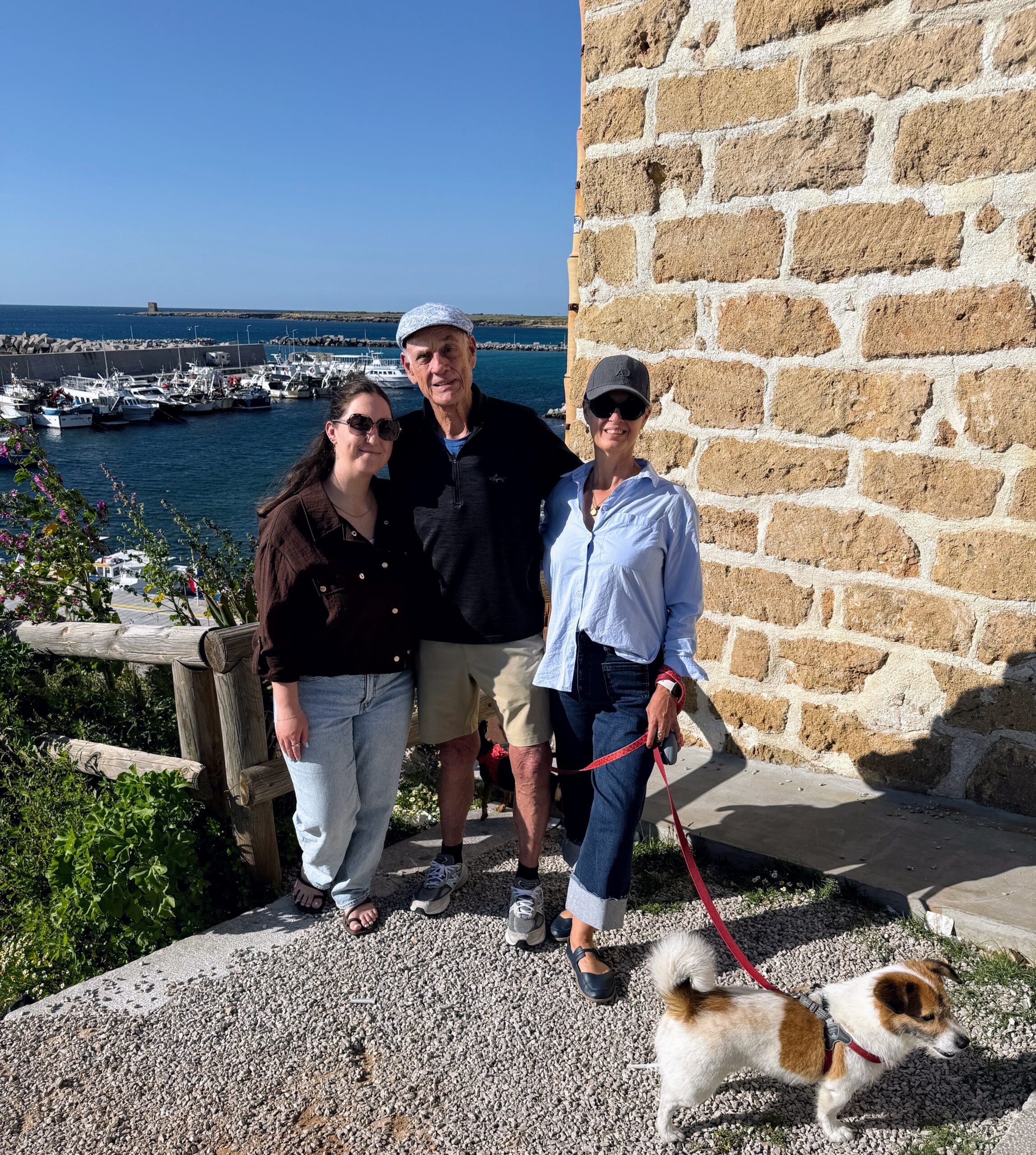
And then my dad had a health scare and I was very, very far away.
That’s the thing nobody quite prepares you for. Not because people don’t warn you — they do, actually, in the vague way people warn you about things they can’t fully describe. But the experience of it is different from the idea of it. You’re sitting in a place that has started to feel like home, and somewhere across the ocean someone you love is frightened, and the uncomplicated ability to just show up is gone. You can get on a plane. You can be there in a day, maybe less. But it’s not the same as being twenty minutes away.
I’ve had people say to me, quietly, almost like they’re embarrassed by it: “This is the part I’m scared of.” Not the visa. Not the paperwork. Not even the uncertainty about whether they’ll qualify or whether the process will go smoothly. Those things are stressful, obviously. But they’re problems with solutions.
What scares people is that this other thing doesn’t have a clean solution. It has a renegotiation.
The people I’ve seen struggle most with the emotional side of this move are not, as a rule, people who are running away from something. They’re usually the opposite. They’re the dependable one — the person in the family who keeps track of everything, who everyone calls first, who quietly manages the invisible infrastructure that holds a family together. They are somewhere in the middle of their lives and somewhere in the middle of their families at the same time: still needed by the generation above them, still needed by the generation below. A parent who is getting older and needs more. Adult children who are finding their way and still need them. Grandchildren growing up fast. There is no clean moment when all of that pauses and says: “now, go.”
And so they sit with this peculiar tension: part of them wants the slower mornings, the apartment in Italy, the version of themselves that gets to pursue something they’ve wanted for years. The other part is still running the mental calendar of who might need them next Tuesday.
I was that person. I still am, some days.
If you are reading this and recognizing yourself in that description, I want to say something directly: you are probably not at the beginning of this research. You know more about jure sanguinis, or income requirements for the elective residency visa, or what’s happening with Italian citizenship law right now than most people in your orbit. You have done your homework. What’s keeping you isn’t a lack of information. It’s something harder to name — a feeling that wanting this for yourself, while everyone still needs something from you, is a luxury you haven’t quite earned permission for yet.
I recognize that feeling. I spent a long time in it.
What I wish someone had told me earlier is not that it gets easier, exactly — though in some ways it does — but that moving doesn’t remove you from your family. It changes the logistics. It doesn’t change what you are to them, or what they are to you.
What happens instead is that you become more intentional about it. And this sounds like a lovely reframe, I know, but in practice it is genuinely very ordinary. It looks like having conversations before you go that you probably should have had anyway. Who has copies of the documents. Who knows the combination to things. Who is the first call if something happens. What it actually looks like logistically if you need to get on a plane at short notice.
These conversations are not fun. They are also not optional if you want to move with any real peace of mind. Having them ahead of time changes something about the emotional texture of the departure. You stop feeling like you’re disappearing from your life. You feel more like you’ve reorganized it — handed things off properly, made plans, thought it through. That’s a different feeling.
But the fear most people carry into this — the real one, underneath the visa questions and the income requirements and the housing calculations — is the fear of damaging something that matters. That they’ll drift from the people they love, or that leaving will be read as a kind of abandonment, or that they’ll regret it in ways they can’t yet imagine.
What I’ve found is that life becomes more layered, not more diminished.
I can love this life and cry after a call with family in the same afternoon. I can feel certain about my decision and still miss people with a sharpness that surprises me. I can be homesick and home at the same time. These are not contradictions. They are just what it looks like to have a life that’s been stretched across two places.
No one tells you that before you go. People tend to talk about relocation in extremes: you’ll either be transformed and wildly happy, or you’ll fail and come home within the year. Real life is quieter than that and more durable than that. Some days Europe feels extraordinary. Some days it feels impossibly far from everyone I love. Most days it feels like my normal, ordinary, complicated, layered life.
That’s probably the healthiest version of this. Not perfect. Not magic. Just life.
If the people question is the one keeping you stuck — the aging parent, the grandchildren, the sense that you’re the one everyone depends on — I’d like to hear your specific version of it. If you want to talk through what’s actually in the way versus what feels like it’s in the way, which are sometimes the same thing and sometimes very different from someone who is living it, let’s talk.